Over the last few weeks for the first time I created a Digital Artifacts. Throughout the DA I tried to highlight many areas of iterations and importance I’ve made during the course the weeks. The Conceptual idea for my DA was to try to speculate and in doing so highlight how the technology I’ve created “Sonar Reality” with real evidence, being able too assist those who are blind or visually impaired. I thought if the idea when I saw an ad online showcasing how hard it is to have a disability of some sought. This prompted in my mind, to do some research into areas I could improve on. Once I found an area that was well documented into having research but more so allowed me still some room to explore, I was able to conceptualized the idea of Sonar Reality. I went into great lengths in my blogs to showcase further information that I’ve read into each post. Not only does each post have my breakdown of the area but further evidence exploring it as well in greater depth. I wanted this Blog website to be a area where you could find information as well links to other areas to help further research into the curing the blind. This would benefit the social utility of people who are blind or researchers whom are looking for information as well. I found success in gathering information, as there is so much about each individual technology, however it was evident that it each one had to be carefully articulated to work coherently. I found it hard too keep up too date with anything new, also making sure I don’t repeat the same information I’ve spoken about already. More so I made few variations and iterations to my DA blog from the comments from peers. I tried to answer questions they provided in terms of military use of Sonar Technology, but also the negative affects if my technology was too break. Also I wanted my information being concise and easy too read, so people didn’t have to spend a day finding critical information. When I first approached the future cultures DA challenge I was on new ground. Trying to find the right medium and concept to allow me to explore a technology that will shape the future really intrigued me. As it raised the question of how do I create something different but relatable in someway. Overall I really enjoyed this class and assignment, it made me look into areas id never thought id be exploring. More so I was able to contract ideas of how the world will be in terms of society. I feel I challenged myself to do research but also to address the future of the world. At the end of the day the students of bcm325 are the future of the world, meaning some of these wild ideas may be used and come true in our lifetime.
DA Contextual essay

Over the last few weeks for the first time I created a Digital Artifacts. Throughout the DA I tried to highlight many areas of iterations and importance I’ve made during the course the weeks. The Conceptual idea for my DA was to try to speculate and in doing so highlight how the technology I’ve created “Sonar Reality” with real evidence, being able too assist those who are blind or visually impaired. I thought if the idea when I saw an ad online showcasing how hard it is to have a disability of some sought. This prompted in my mind, to do some research into areas I could improve on. Once I found an area that was well documented into having research but more so allowed me still some room to explore, I was able to conceptualized the idea of Sonar Reality. I went into great lengths in my blogs to…
View original post 339 more words
DA Contextual essay
Over the last few weeks for the first time I created a Digital Artifacts. Throughout the DA I tried to highlight many areas of iterations and importance I’ve made during the course the weeks. The Conceptual idea for my DA was to try to speculate and in doing so highlight how the technology I’ve created “Sonar Reality” with real evidence, being able too assist those who are blind or visually impaired. I thought if the idea when I saw an ad online showcasing how hard it is to have a disability of some sought. This prompted in my mind, to do some research into areas I could improve on. Once I found an area that was well documented into having research but more so allowed me still some room to explore, I was able to conceptualized the idea of Sonar Reality. I went into great lengths in my blogs to showcase further information that I’ve read into each post. Not only does each post have my breakdown of the area but further evidence exploring it as well in greater depth. I wanted this Blog website to be a area where you could find information as well links to other areas to help further research into the curing the blind. This would benefit the social utility of people who are blind or researchers whom are looking for information as well. I found success in gathering information, as there is so much about each individual technology, however it was evident that it each one had to be carefully articulated to work coherently. I found it hard too keep up too date with anything new, also making sure I don’t repeat the same information I’ve spoken about already. More so I made few variations and iterations to my DA blog from the comments from peers. I tried to answer questions they provided in terms of military use of Sonar Technology, but also the negative affects if my technology was too break. Also I wanted my information being concise and easy too read, so people didn’t have to spend a day finding critical information. When I first approached the future cultures DA challenge I was on new ground. Trying to find the right medium and concept to allow me to explore a technology that will shape the future really intrigued me. As it raised the question of how do I create something different but relatable in someway. Overall I really enjoyed this class and assignment, it made me look into areas id never thought id be exploring. More so I was able to contract ideas of how the world will be in terms of society. I feel I challenged myself to do research but also to address the future of the world. At the end of the day the students of bcm325 are the future of the world, meaning some of these wild ideas may be used and come true in our lifetime.
Exposure of Sonar Reality


Exposure of Sonar Reality
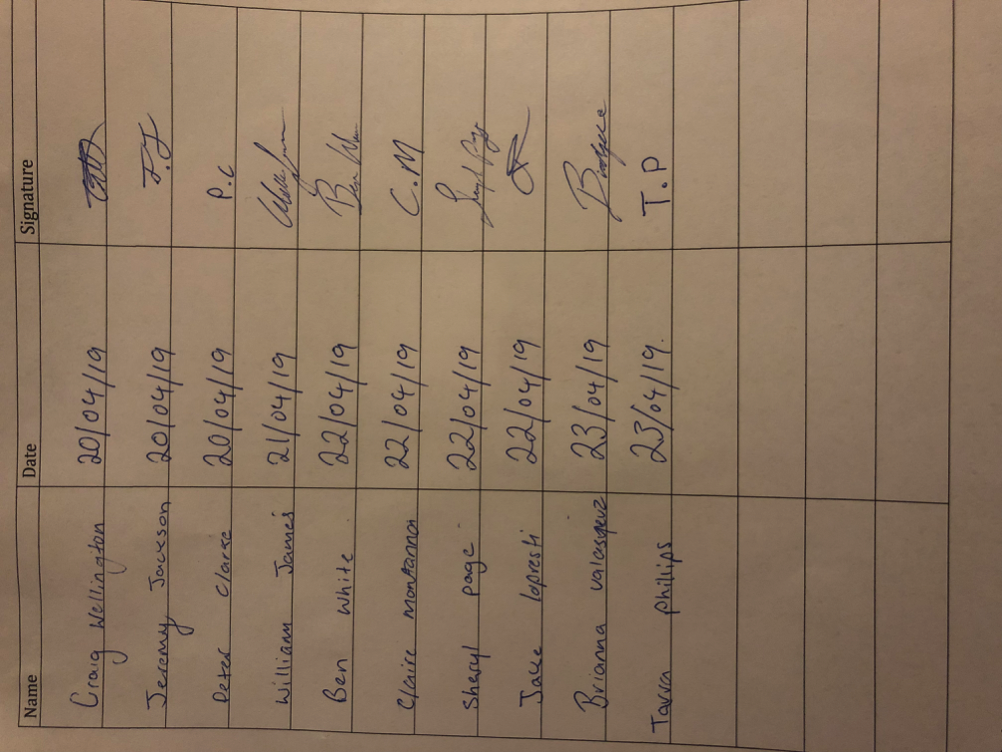
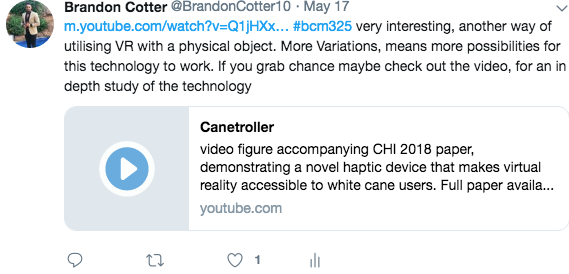
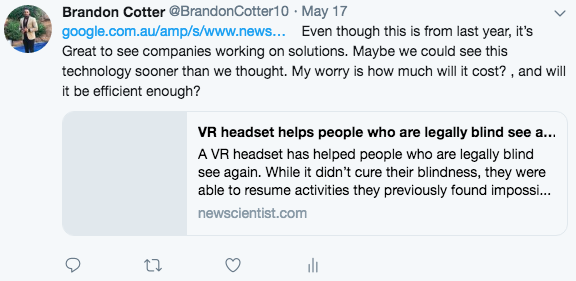
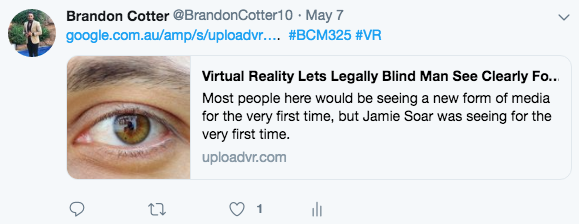
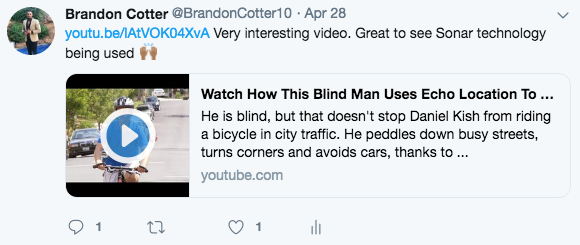
Throughout the weeks I utilized the internet by spreading and expanding my audience by creating as much awareness as I could. My first option, which I used, was twitter; this allowed me but links and hash tags for my audience to access. I took this as a marketing approach in terms I needed quick access for people to locate and find my information on the go. Knowing so many people have busy lives, I tried small and concise tweets on my personal accounts and sharing them too different pages. Using videos about technology or breakthroughs too even having a small poll for the public. From responses from online, it wasn’t affective enough I felt. I had a couple of likes and a retweet. But still didn’t find enough traction. However in April I had enough time to go out and talk to people face too face. For me this was the best decision, it a loud me to break down any questions they had, but more importantly creating the human connection and contact. This allowed me to grab signatures and names for the petition if the person would support the technology. A lot were happy to sign however a few said they’d support but without signing the form.
Twitter link (https://twitter.com/BrandonCotter10 )
Concerns for Sonar Reality
Sonar Reality is standing upon groundbreaking technology. Not only does it combine sonar and virtual reality but tracers the brainwaves of the patient to suit and map out the surroundings. After hearing a lot of positives about the technology, I wanted to draw attention to any concerns that may rise up during development.
One concern that came up was what if the technology was too turn off or go dark on the person wearing it. Wouldn’t it leave them stranded and helpless? Yes, however through my research I’ve discovered a back up mechanism that will allow the person be able to help the those who are visually impaired. I’ve looked into an additional small monitor that sits on your hand, this monitor users a vibration system too help located the nearest door or equipment needed for the headset. But the most important kit, if the person is isolated the wrist monitor has buttons in brail that sends out a pulse that allows distress calls for help. (https://nei.nih.gov/news/briefs/five-innovations-harness-new-technologies-people-visual-impairment-blindness ).
Also another alternative is using this new cane device that branches into the areas of echolocation. Maybe using the cane should be made mandatory with sonar reality, allowing the individual to feel more confront knowing they have support in their own bearings.
Military Use of this Sonar Reality in the Future
After analyzing the diagnostics and articulation of combing the technology I can see the military and governments using it for their own assistance. Sonar isn’t new too military warfare, its been around since 1906 and was made by Lewis Nixon who’d made it listen for icebergs. However French physicist was the first person to construct the device to listen for other submarines. With todays technology using satellite imaging and drone footage the warfare game as changed. More so night vision has always been hard to use, due to the fact of having massive headgear, and hard visibility. However using something like sonar reality it could be able to construct the surrounding environment enabling the ground troops too locate and safely use the gear to execute missions. Throughout the world here is always similar developments in different military’s, for example the air force has been testing self flying air crafts without human occupants in them, the pilot is controlling the aircraft from a safe location from a far. This not only has provided assistance into keep the fatality rate down, but also has allowed more training and development for new technology (https://www.theverge.com/2019/5/22/18636313/us-air-force-xq58-a-valkyrie-loyal-wingman-f-35-15ex-artificial-intelligence-fighter-jet) . The military are always looking for new technology to help evolve their armory, but more so to help protect their troops from being injured.
How will Sonar Reality Influence the Future?
The Technology that I’m trying to explore is well into development today. The Company Sonar Glasses have already started and developed glasses that work for the blind. However they haven’t reached mainstream media, making it hard for them to expand their business. Our business is looking at different technology’s that have been well documented, in which they’ve assisted the visually impaired of blind. But how does this technology look in the next few years.
5 years from now the technology will relatively be the same, however the scope of VR and sonar will be more prominent in communities throughout the world. By then the new generation of PlayStations will be out (PS5) meaning the new generation of VR will be introduced as well. Sonar and brain implants will also become more of a common element in medical practice. This can be seen in the article (https://www.technologyreview.com/s/608844/blind-patients-to-test-bionic-eye-brain-implants/) the highlights blind patients being tested with a bionic eye in 2017. 5 years from now I still think the technology will grow, in fact it will be reaching more of a public viewing.
10 years from now id say the technology will be as common as any other procedure. Being this is speculative this far into the future, we can assume that newer technology around brain implants; sonar and VR will be introduced. At this time I still don’t think the technology we are looking at now will be obsolete but it will eventually fade out for the new wave of tech.
25 years from now I can probably guarantee there will be new technology that’s not only assisted the blind or visually impaired to be able to see, but has made the technology of today obsolete. Being that’s its defiantly on the speculative sides of the scales, it would be hard to comprehend what type of technology would be in place. As each passing year or few years technology begins to leap into the next phase.
50 years from now, was probably the hardest too imagine. If we look back 50 years ago in the past and how society plus technology was in that time, it would be harder to imagine what the future would look like in 50 years. For this I looked at the best form of media to help me understand his type of format. The movie/ tv-show Genre of Sci-Fi is a major in influencing many companies for going beyond and making things impossible possible. So I looked into blade runner, avatar and other sci fi movies; how they have developed their technology. A lot of assisting technology for those who are disabled or amputees can be seen with new robotic limbs and arms. So at this point id assume that bionic eyes would be also available as well. More so AI, could be a major progression into society as well as robotic assistance such as self-driving, or home appliance help etc. this scholar article highlights how globalization will affect technology throughout the future, also highlighting key areas I’ve talked about. (file:///Users/Staff/Downloads/Howtechischangingwork2016.pdf )
Financial and Social Affects of Sonar Reality
When researching I was trying too make sure that the product Sonar Reality is cost efficient but also affordable. A normal Virtual realty goggles on average cost around $500 depending on the brand and what type of Virtual reality you do get. On average a pair of hearing aids will cost you over 5 years. That’s about $6,000 a pair that will last you 5 years. That’s $1200 a year, $23 a week, or $3.30 a day. (https://hearinglife.com.au/hearing-aids/the-cost-of-hearing-aids/) . The Sonar technology will cost around $800-$1000 as well (http://edition.cnn.com/2014/06/20/tech/innovation/sonar-sticks-use-ultrasound-blind/index.html ) . So firmly with development and alterations it may cost somewhere between $3000-$3500. Now this is a steep price for anyone, however we are working on having monthly cost instalments over 5 years. Allowing the occupants be able to use the technology without being in debt. Also we are looking it be claimed by also health insurance, allowing them use their insurance to help in these situations as well.
The social impacts of this technology will allow the person to be able too engage in activities by themselves. Using the Sonar and virtual reality this will allow the person to be able to understand their environment and keep awareness of any dangers around them. This technology will give the person their own individuality, to assume responsibility of what they can do. However how would the wider community that does have normal vision feel about these massive technology changes towards the visually impaired or blind? From research a lot of positives would come into play, equal opportunity for those who are visually impaired. In fact there wouldn’t be much of a down side, with the visually impaired being more independent this can allow disability services to focus on other areas of needs. This following scholar article by Alexy Bhowmick looks into technology and its affect throughout society (file:///Users/Staff/Downloads/art3A10.10072Fs12193-016-0235-6.pdf) .
The Concept of Sonar Reality
The Concept of Sonar Reality is the combination of Sonar and Virtual Reality. How this Technology Works is using the Sonar waves which the implant will send out allowing the waves to bounce back helping the person map out the surrounding environment. Once the information is being received it will then be sent to the brain and eye implants to help simulate and visualise the area. The Virtual Reality aspect is then put into affect when the response of the brain triggers the cornea to look for certain colours and shapes within the occupants glasses which will map out the environment outside.
The process we are using for making and testing is using the same technology as the sonar implants that in society now, plus virtual reality technology and neurological technology that allows us too connect all sensory outputs to help the virtual process. Scholarly articles from Ludwig Wallmeier and Roberto W. Flores provides commentary on how echolocation for the blind does work and is effective. Furthermore we can see sites such as national geographic and news atlas reporting of blind people utilising the Sonar implants now. Unfortunately this issue is very relevant in society.
The statistics say 285 million people are impaired and 39 million are blind. If this technology works, it can change a major landscape in society and science innovation. This could change the future of generations of people whom are blind, that there is chance for them to being able to see.
 Sonar Reality